 Emergency Line: 0824 3506000
Appointments & Enquiry : 8904181950
oncocenter@yenepoya.edu.in
Emergency Line: 0824 3506000
Appointments & Enquiry : 8904181950
oncocenter@yenepoya.edu.in




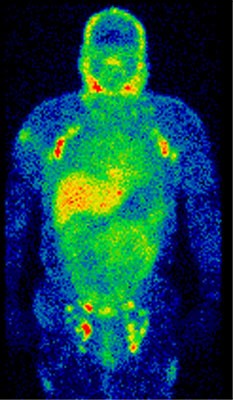
ASPECT imaging instruments provide three-dimensional (tomographic) images of the distribution of radioactive tracer molecules that have been introduced into the patient’s body. The 3D images are computer generated from a large number of projection images of the body recorded at different angles. SPECT imagers have gamma camera detectors that can detect the gamma ray emissions from the tracers that have been injected into the patient. Gamma rays are a form of light that moves at a different wavelength than visible light. The cameras are mounted on a rotating gantry that allows the detectors to be moved in a tight circle around a patient who is lying motionless on a pallet.
SPECT scans are primarily used to diagnose and track the progression of heart disease, such as blocked coronary arteries. There are also radiotracers to detect disorders in bone, gall bladder disease and intestinal bleeding. SPECT agents have recently become available for aiding in the diagnosis of Parkinson's disease in the brain, and distinguishing this malady from other anatomically-related movement disorders and dementias.